
Poland
GdyniaLublinSzczecinPrzemyślGdańskPoznanSopotTorunŁódźKatowicePiwnicza-ZdrójChałupyKolobrzegOlsztynKrakowWrocławHelNowy TargKłodzkoJurataWładysławowoWalbrzychRzeszówKielceBialystokZakopaneWarsaw
Train to Paris - connections, tickets and itinerary
Trains from Germany arrive at Paris Gare de l'Est station (Place du 11 Novembre 1918, 75010 Paris). From the station you can reach the centre by metro in a few minutes. France is in the Schengen area, so Polish citizens only need an identity card.
Fast facts - Paris by train
-
Best time to go: May-June and September - smaller crowds than in peak summer and pleasant temperatures for walking
-
Local transport: a single metro or bus ticket is a few zlotys, and a daily ticket is a dozen or so
-
How much to go for: a weekend (Friday evening - Sunday) is enough for the main attractions; 3-4 days allow you to add Versailles and quieter districts
-
Documents: you can enter France with an identity card
-
Practical tip: book your tickets to the Louvre and the Eiffel Tower online before you go - queues on site can take several hours
When to go to Paris
It is best to choose May, June or September, when it is easier to find pleasant walking weather and lower accommodation prices than at the peak of the holiday season.
| Month | Daytime temperature | Weather | Tourist traffic |
| January | 8°C | Cool, possible rainfall | Low |
| February | 9°C | Cool, short days | Low |
| March | 13°C | Spring warming, variable conditions | Moderate |
| April | 16°C | Mild, parks in bloom | Moderate |
| May | 21°C | Warm, plenty of sunshine | High |
| June | 24°C | Warm to hot | High |
| July | 26°C | Hot, possible heatwaves | High |
| August | 26°C | Hot, possible heatwaves | High |
| September | 22°C | Warm, mild | Moderate |
| October | 16°C | Cooler, colourful leaves | Moderate |
| November | 11°C | Cool, short days | Low |
| December | 8°C | Cold, festive illuminations | Moderate |
Spring (March–May)
-
In May, the Tuileries and Luxembourg gardens are in bloom, and at 18–21°C you can comfortably walk around the city all day.
-
In March and September, Paris Fashion Week takes place, so hotels tend to be more expensive and vacancies disappear faster.
-
From May, the peak tourist season begins, so queues to the Louvre and the Eiffel Tower are longer.
Summer (June–August)
-
June sees the Fête de la Musique with free concerts on streets throughout the city.
-
In summer, the Tour de France finale ends on the Champs-Élysées.
-
July and August are the hottest months, and some local bistros and bakeries close for the holidays.
-
Accommodation prices rise during the peak season, so it is worth booking early.
Autumn (September–October)
-
In September, daytime temperatures are 13–22°C, the crowds are smaller than in summer and accommodation prices are more likely to fall.
-
Autumn sees the Nuit Blanche, when museums and galleries are open all night free of charge.
-
In October, the leaves change colour in the Luxembourg Gardens and along the Seine, and tourist traffic drops to moderate.
Winter (November–February)
-
In December, the city is decorated for Christmas and illuminations appear on the main boulevards.
-
Accommodation prices rise before Christmas and New Year's Eve.
-
January and February are the quietest months, with lower accommodation prices and shorter queues at museums.
Getting to Paris by train
You can reach Paris with one change in Berlin. You change trains at Berlin Hauptbahnhof station.
From Poznań to Paris
-
From Poznań Główny station, you first travel to Berlin and then change trains to Paris Gare de l'Est. The whole journey takes about 12–13 hours.
-
You change trains at Berlin Hauptbahnhof station.
-
Seat reservations are compulsory on the international leg.
From Wrocław to Paris
-
From Wrocław Główny station to Paris, the journey takes approximately 12–14 hours.
-
The route passes through Berlin and you change trains at Berlin Hauptbahnhof station.
-
Seat reservations are compulsory on the international leg.
From Warsaw to Paris
-
You travel about 5.5 hours from Warsaw Central station to Berlin, and another roughly 8 hours from Berlin to Paris Gare de l'Est. The entire journey takes around 13–14 hours.
-
On the Berlin–Paris section, the train stops in Strasbourg and Karlsruhe, among other places.
-
If you choose a seat on the left side of the carriage on the section from Germany to France, you will see the vineyards of Alsace and the Rhine valley.
-
Seat reservations are compulsory on the international leg.
From Kraków and Gdańsk you can also travel with one change in Berlin, and the whole journey takes about 14–16 hours. You can buy your ticket for the section from Poland on Europodróże without registration, and after purchase you will receive it by e-mail and SMS. 30 minutes before departure you will receive an SMS with a link to your ticket. The earlier you buy, the better the price and the greater the choice of seats. Tickets for the section from Germany to France can be purchased through Deutsche Bahn or SNCF. The rules for PKP Intercity tickets are clear: you can request a refund up to 20 minutes before departure and an exchange up to 30 minutes before departure. You will find details by checking the rules for refunds and exchanges.
Getting around Paris
There is a metro service at Gare de l'Est, so you can reach the centre in a matter of minutes. The metro entrance is inside the station building.
Taxis and ride-hailing apps such as Uber and Bolt are available at the station exit. With heavy luggage, this is a practical option and the ride to the centre costs a few tens of zloty.
A single metro or bus ticket costs a few zlotys. If you plan several journeys a day, a daily ticket for around a dozen zlotys will be more convenient. Paris has an extensive metro, bus and tram network. Check the current local public transport app for route planning before you go.
Get around Paris by metro and on foot.
Where to stay:
-
Marais - close to the centre, historic architecture, plenty of cafés and galleries
-
10th arrondissement around Canal Saint-Martin - close to Gare de l'Est, local atmosphere and restaurants at lower prices
-
Montmartre - views over the city, Sacré-Cœur nearby and atmospheric streets
What to see in Paris – highlights
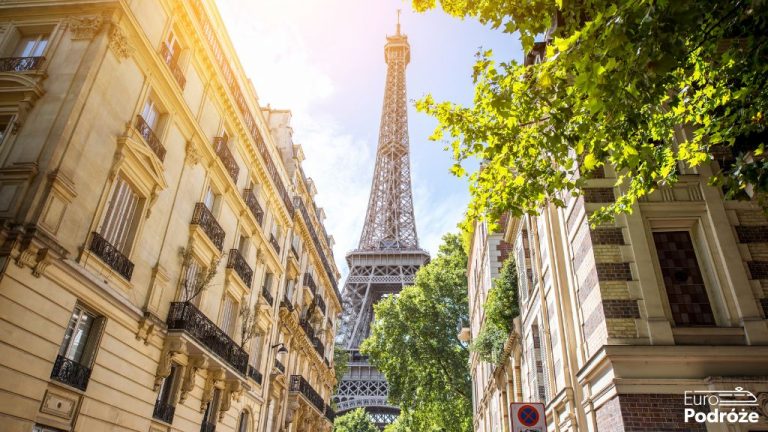
Eiffel Tower
The visit takes 1.5–2 hours including the queue. There is an entrance fee. Book your tickets online, as the wait on site can take several hours. The best views are at sunset, when the city lights up in gold.
Louvre Museum
The visit takes 2–4 hours, depending on how many rooms you want to see. There is an entrance fee, and entry is free for EU residents under 26. Additional admission rules apply on the first Sunday of the month, so check the current information before you go. If you have limited time, focus on the Mona Lisa, the Winged Victory of Samothrace and the Venus de Milo.
Sacré-Cœur and Montmartre
Visiting the basilica takes about an hour. Admission to the basilica is free, while there is a fee to enter the dome. Before 9 am it is easier to avoid the crowds. After your visit, take a walk through the streets of Montmartre – you'll see the Place du Tertre with its portrait artists, the Clos Montmartre vineyard and a panoramic view of the city from the steps in front of the basilica.
Notre-Dame Cathedral
Check the current status before visiting, as the cathedral was undergoing restoration following the fire in 2019. Exploring the exterior and the surrounding area on Île de la Cité takes around 45 minutes. The island itself is one of the oldest places in Paris, so it is well worth walking along the banks of the Seine.
Musée d'Orsay
The visit takes 1.5–2 hours. There is an entrance fee, and entry is free for EU residents under 26. The museum is smaller than the Louvre, but you will find works by Monet, Renoir and Van Gogh. The building itself is a former railway station.
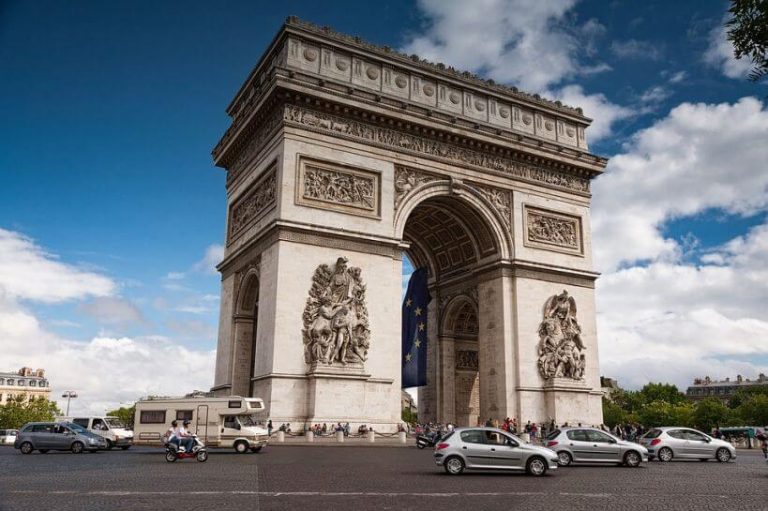
Champs-Élysées and Arc de Triomphe
Walking the avenue and climbing the Arc de Triomphe takes 1.5–2 hours. There is an entrance fee for the Arc. In the evening, the avenue is spectacularly lit up, making it a great time for a walk from Place de la Concorde to the Arc.
Plan for 1 day
Start the morning with Notre-Dame and the Île de la Cité area. In the afternoon, take the metro to the Eiffel Tower and book your ticket in advance. In the evening, walk down the Champs-Élysées towards the Arc de Triomphe.
Plan for the weekend
Day 1: Visit the Louvre in the morning, preferably with an early entry ticket. In the afternoon, walk around the Marais and in the evening have dinner by Canal Saint-Martin.
Day 2: In the morning, visit Sacré-Cœur and Montmartre, and in the afternoon choose the Musée d'Orsay or a stroll through Saint-Germain-des-Prés. If you have a third day, take a trip to Versailles – it takes about 40 minutes by train from central Paris.
Food and shopping in Paris
What to eat
Croissant and coffee - start your day in Paris with a croissant and coffee at a local bakery. In the 10th arrondissement and the Marais, café prices are lower than at the main attractions and the quality of the baked goods is often excellent.
Crêpes sold on the street are a classic Parisian snack. You can find them near the Eiffel Tower, Notre-Dame and in Montmartre. You can choose a sweet version with Nutella or a savoury one with ham and cheese.
L'As du Fallafel on Rue des Rosiers in the Marais is one of the most famous falafel shops in the city. There is a queue almost every day, but the portions are generous.
Escargots and coq au vin - of the classic French dishes, try escargots and coq au vin. You'll find these at bistros in Montmartre and the Marais.
Café de Flore - in the evening, head to Canal Saint-Martin, where cafés and pubs have a lively local atmosphere. If you want to soak up the spirit of literary Paris, visit the Café de Flore in Saint-Germain-des-Prés – it is a historic café with higher prices, but for many visitors the experience itself is worth it.
Souvenirs
-
Macarons from Ladurée or Pierre Hermé - an elegant souvenir sold in decorative boxes, easy to carry home
-
French wine and cheeses - Camembert, Brie and Comté at local delicatessens often cost less than in Poland; when transporting cheeses, remember to pack them in an airtight container
-
French brand perfumes - bought in Paris, they offer a wide selection of limited editions; EU tourists cannot claim a VAT refund, but it is easier to find a broader range locally than in Poland
How much does Paris cost? Indicative costs
| Category | Budget | Mid-range | Comfort |
| Accommodation (1 night) | 150–250 zł | 400–600 zł | 800–1500 zł |
| Food (3 meals) | 60–100 zł | 150–250 zł | 300–500 zł |
| Local transport | 30–50 zł | 30–50 zł | 100–200 zł |
| Attractions | 0 zł | 100–200 zł | 200–400 zł |
| Total | 240–400 zł | 680–1100 zł | 1400–2600 zł |
The cost of train tickets from Poland is a separate expense – the earlier you buy, the better the price and the greater the choice of seats.
Accommodation prices rise in June, July and before Christmas. In January, February, October and November, accommodation is more likely to cost less, so a weekend in Paris can work out noticeably cheaper than in high season.
Frequently asked questions
Yes, you will enter France with an identity card. Just check that the document is valid before you leave.
The journey takes approximately 13-14 hours and includes one change in Berlin. Check the current timetables before you go, as journey times may change.
You will get to Paris with one change in Berlin. You have a train change at Berlin Hauptbahnhof station.
Yes, seat reservations are compulsory on the overseas leg. Check the up-to-date information for the entire route before departure.
Trains from Germany arrive at Paris Gare de l'Est station at Place du 11 Novembre 1918, 75010 Paris. From the station, you can reach the centre by metro in a dozen minutes.
You can buy a ticket for a section from Poland on Europodróże without creating an account. After purchase you will receive it by email and SMS, and before departure you will receive a reminder with a link to your ticket.
The price depends on the date of purchase, carriage class and season. The earlier you buy, the greater the choice of seats and the better the price.
Rules depend on the carrier. For PKP Intercity tickets, you can request a refund up to 20 minutes before departure and an exchange up to 30 minutes before departure; check the current information before you leave.
A weekend is enough for the Eiffel Tower, the Louvre and Montmartre. If you want to add Versailles and quieter neighbourhoods, plan 3-4 days.
The easiest way is by metro, as the station is right inside the building. Taxis and ride-hailing apps are available at the exit, and it is worth checking current public transport information before you go.
Yes, you will enter France with an identity card. Just check that the document is valid before you leave.
The journey takes approximately 13-14 hours and includes one change in Berlin. Check the current timetables before you go, as journey times may change.
You will get to Paris with one change in Berlin. You have a train change at Berlin Hauptbahnhof station.
Yes, seat reservations are compulsory on the overseas leg. Check the up-to-date information for the entire route before departure.
Trains from Germany arrive at Paris Gare de l'Est station at Place du 11 Novembre 1918, 75010 Paris. From the station, you can reach the centre by metro in a dozen minutes.
You can buy a ticket for a section from Poland on Europodróże without creating an account. After purchase you will receive it by email and SMS, and before departure you will receive a reminder with a link to your ticket.
The price depends on the date of purchase, carriage class and season. The earlier you buy, the greater the choice of seats and the better the price.
Rules depend on the carrier. For PKP Intercity tickets, you can request a refund up to 20 minutes before departure and an exchange up to 30 minutes before departure; check the current information before you leave.
A weekend is enough for the Eiffel Tower, the Louvre and Montmartre. If you want to add Versailles and quieter neighbourhoods, plan 3-4 days.
The easiest way is by metro, as the station is right inside the building. Taxis and ride-hailing apps are available at the exit, and it is worth checking current public transport information before you go.
Check out where else you can go by train in Europe
Czech Republic
BrnoOstravaPragueOlomoucNetherlands
RotterdamAmsterdamFrance
LilleToulouseBordeauxNiceDijonLyonParisMarseilleParisAvignonSwitzerland
Château-d'OexLucerneSt. MoritzZurichLuganoBrocMontreuxInterlakenSankt GallenGenevaBernBellinzonaBaselAustria
InnsbruckVienna