
Poland
GdyniaLublinSzczecinPrzemyślGdańskPoznanSopotTorunŁódźKatowicePiwnicza-ZdrójChałupyKolobrzegOlsztynKrakowWrocławHelNowy TargKłodzkoJurataWładysławowoWalbrzychRzeszówKielceBialystokZakopaneWarsaw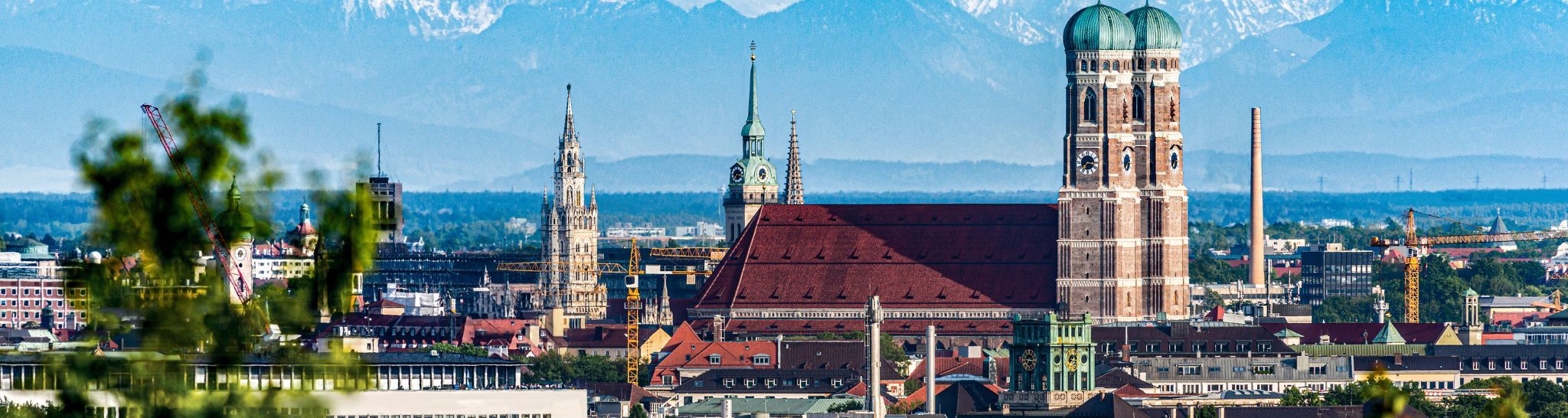
Train to Munich - connections, tickets and itinerary
München Hauptbahnhof station at Bahnhofsplatz 1 is close to the historic centre - you can get to Marienplatz by metro in a few minutes or walk there in around fifteen minutes. You can enter Germany with an identity card, as the country is part of the Schengen area. From Katowice you travel to Munich in about 9-10 hours, from Wrocław about 10-11 hours, from Kraków about 11-12 hours and from Warsaw about 13-14 hours.
Fast facts - Munich by train
-
Currency: Euro. You will easily communicate in English in the touristic parts of the city.
-
Best time to go: May, June or September, when the daytime temperature is 21-25°C.
-
Local transport: metro, S-Bahn, trams and buses within the MVG system.
-
How much to go for: a weekend is enough for Marienplatz, Frauenkirche, Englischer Garten and Nymphenburg Palace. For 3 days, plan a visit with museums, including the Alte Pinakothek or the Deutsches Museum.
-
Practical tip: during Oktoberfest, at the end of September and the beginning of October, accommodation prices even double, so book your hotel several months in advance.
When to go to Munich
The best choice is May, June or September, when the daytime temperature is 21-25°C and it is easier to explore the city without the summer heat.
| Month | Daytime temperature | Weather | Tourist traffic |
| January | 4°C | Frosty, possible snow | Low |
| February | 6°C | Cool, dry | Low |
| March | 11°C | Spring warming, variable weather | Moderate |
| April | 16°C | Warm, occasional rain | Moderate |
| May | 21°C | Warm, sunny | High |
| June | 25°C | Warm, long days | High |
| July | 27°C | Hottest, possible afternoon thunderstorms | High |
| August | 26°C | Warm, humid | High |
| September | 21°C | Warm, sunny | High |
| October | 15°C | Cooler, colourful foliage | Moderate |
| November | 9°C | Cool, overcast | Low |
| December | 5°C | Cool, possible snow | Moderate |
Spring (March–May)
-
The daytime high in May is 21°C and the gardens around Nymphenburg Palace are already in full bloom.
-
The Lange Nacht der Museen takes place in May and allows you to visit many museums on a single ticket.
-
March sees the Starkbierfest, a local beer festival with less tourist traffic than during Oktoberfest.
Summer (June–August)
-
In June and July the daytime temperature reaches 25-27°C, making walks in the Englischer Garten very pleasant.
-
Filmfest München takes place in summer, usually in late June and early July.
-
July and August see the highest tourist traffic and accommodation prices are at their highest of the year.
Autumn (September–October)
-
Oktoberfest takes place in late September and early October and attracts more than 6 million visitors a year to Theresienwiese.
-
In September, outside of the festival, it is still 21°C during the day and the city centre and parks are well worth exploring.
-
In October, after Oktoberfest ends, tourist traffic wanes and the Englischer Garten shows its autumn colours.
Winter (November–February)
-
The Christmas markets on Marienplatz run from the end of November until Christmas.
-
In January and February tourist traffic is at its lowest and accommodation prices drop.
-
From Munich you can reach Garmisch-Partenkirchen in the Bavarian Alps in about 1.5 hours by train.
Getting to Munich by train
You can get to Munich from several major cities in Poland by day or night train.
From Katowice to Munich
-
The journey takes approximately 9-10 hours.
-
Direct connections and an overnight variant with couchettes and sleeper cars are available.
-
The evening departure allows you to reach Munich in the morning.
-
Katowice is an important hub for connections from southern Poland.
From Wrocław to Munich
-
You travel from Wrocław in around 10-11 hours.
-
You either get there directly or with one change in Katowice.
-
The route leads through Silesia and the Czech border region.
From Kraków to Munich
-
From Krakow you travel approximately 11-12 hours, usually with a change in Katowice.
-
There is also an overnight train available, which you leave in the evening and arrive in the morning.
-
The overnight option allows you to forgo one hotel night.
From Warsaw to Munich
-
You travel approximately 13-14 hours from Warsaw, with a change in Krakow or Katowice.
-
An overnight train with arrival in Munich in the morning is also available.
-
This option leaves more time for sightseeing on arrival.
From Poznań to Munich
-
From Poznan, you travel approximately 13-14 hours with a change of trains in Wroclaw or Katowice.
-
You change trains only once, at the same station.
Reservation of a seat is compulsory on the foreign section. You buy your ticket on Europodróże without registration - you receive it by e-mail and SMS. An SMS reminder with a link to the ticket arrives 30 minutes before departure, so you are not looking for it in your email inbox. The earlier you buy, the better the price and the greater the choice of seats. For details, see the refund and exchange policy page - PKP Intercity: refund up to 20 minutes before departure, exchange up to 30 minutes before departure.
Local transport in Munich
You get around Munich by metro, S-Bahn, trams and buses. The main attractions are close to one another, so if you make several trips a day it is better to buy a day ticket rather than several single tickets.
The MVG public transport system includes the metro, suburban rail (S-Bahn), trams and buses. A single ticket costs just a few euros, while a day ticket costs a little more. Taxis and ride-hailing apps are available, and a ride from around the station to the centre costs roughly €10–15.
Where to stay:
-
Altstadt (Old Town) - all the main attractions are on your doorstep, but accommodation prices here are among the highest in the city.
-
Sendling - a district close to the Theresienwiese, with accommodation at lower prices than in the city centre.
-
Schwabing - an artistic neighbourhood with cafés, close to the Englischer Garten.
-
Bogenhausen - a quiet neighbourhood close to the River Isar, with good transport links to the centre.
What to see in Munich - highlights
Marienplatz
The city's central square with the neo-Gothic Town Hall. Every day at 11 a.m. and 12 p.m., and in summer also at 5 p.m., the Glockenspiel - a mechanical game of figures on the facade of the town hall - plays. Entrance to the square is free and entrance to the town hall is charged. The tour takes about 45 minutes. Come a few minutes early to find a good viewing spot.
Frauenkirche
A Gothic church from the 15th century with distinctive copper domes, visible from many points in the city. Entrance to the church is free and there is a fee to climb the tower. The tour takes about 45-60 minutes. There is less tourist traffic in the morning than in the middle of the day.
Nymphenburg Palace
Baroque residence of the Wittelsbach family with an extensive park and eight courtyards. There is a fee to enter the palace, while the park remains free of charge. The tour takes about two hours. You can get here from the centre by tram.
Englischer Garten
One of the largest city parks in the world, with an area of around 375 hectares. At the entrance from Prinzregentenstraße you will see surfers on the Eisbach artificial wave. Admission is free of charge. A walk through the main avenues takes about 1.5-2 hours.
Alte Pinakothek
A museum with a collection of paintings from the Middle Ages to the 18th century, including works by Rubens, Rembrandt and Dürer. There is an entrance fee. The tour takes about 2.5 hours. Entry is sometimes at a lower price on Thursday evenings.
Deutsches Museum
One of the largest science and technology museums in the world, located on an island in the River Isar. There is an entrance fee. Plan a full day for the full tour.
Theresienwiese
Oktoberfest grounds. In addition to the festival, see the 18-metre-high Bavaria statue with a viewing terrace. There is a fee to enter the terrace. You can get here by metro.
Plan for day 1
Start at Marienplatz in the morning and be there before 11:00 to see the Glockenspiel. Then walk to the Frauenkirche. For lunch, go to the Viktualienmarkt, a historic market with Bavarian specialities a few minutes from the square. In the afternoon, choose the Englischer Garten for a walk, and in the evening sit in one of the Biergarten.
Plan for the weekend
Friday evening: arrival in Munich and dinner in a Biergarten near the train station or in the Old Town.
Saturday: morning Marienplatz and Glockenspiel, then Frauenkirche and lunch at Viktualienmarkt. In the afternoon, go to Nymphenburg Palace. In the evening, walk around the Altstadt.
Sunday: in the morning, choose the Englischer Garten and be sure to see the Eisbach wave. In the afternoon, plan for the Alte Pinakothek or the Deutsches Museum, as each of these places requires a few hours. In the evening, return to Poland.
Eating and shopping in Munich
What to eat
Weisswurst - Bavarian white sausage made from veal and pork, served with sweet mustard and bread. It is traditionally eaten before noon.
Schweinshaxe - roast leg of pork with a crispy crust. You will most often get it with cabbage and dumplings.
Brezel - a knot-shaped baked product with coarse salt. You can buy it in bakeries, markets and many snack bars.
Obatzda - Bavarian cheese with onions and peppers, served on dark bread. It often finds its way onto tables in beer gardens.
Kaiserschmarrn - a sweet omelette with icing sugar and plum compote. Many establishments serve it as dessert or a second breakfast.
Where to eat:
-
Viktualienmarkt - the historic food market near Marienplatz, operating since 1807. Here you'll find cheeses, baked goods and Bavarian specialities, and a meal usually costs less than in a restaurant.
-
Hofbräuhaus - a legendary establishment in the centre, operating since the 17th century. Inside you'll see wooden tables, live music and stoneware tankards.
-
Augustiner-Bräu - an older brewery with a more local atmosphere and less tourist traffic than Hofbräuhaus.
-
Haidhausen district - a neighbourhood with small restaurants and bars outside the busiest centre.
-
Schwabing (Leopoldstraße) - cafés with gardens and restaurants of various cuisines.
Souvenirs
-
Nymphenburg porcelain - handicrafts from a traditional Munich manufactory.
-
Beer with an Oktoberfest or Hofbräu label - a popular gift from Munich.
-
Lebkuchen - Bavarian gingerbread, especially popular during the fair season.
-
Traditional costumes (Lederhosen and dirndl) - buy them in souvenir shops and fairs.
Nymphenburg porcelain is one of the more expensive souvenirs, and you can buy Lebkuchen in many shops and fairs.
How much does Munich cost? Indicative costs
A weekend in Munich with one night's accommodation costs approximately PLN 290-460 in the budget variant, PLN 660-1010 in the medium variant and PLN 1220-1860 in the comfort variant.
| Category | Budget | Medium | Comfort |
| Accommodation (1 night) | 120-180 PLN | 300-450 PLN | 600-900 PLN |
| Food (per day) | 70-100 PLN | 120-170 PLN | 180-260 PLN |
| Local transport (per day) | 15-20 PLN | 20-30 PLN | 50-80 PLN |
| Attractions (per day) | 0-20 PLN | 40-80 PLN | 80-140 PLN |
| Total (weekend - 2 days) | 290-460 PLN | 660-1010 PLN | 1220-1860 PLN |
The budget variant assumes a hostel or lower-priced hotel, food at the Viktualienmarkt and in simpler establishments, a day ticket for public transport and free attractions such as the Englischer Garten, Marienplatz and a walk around the Altstadt. The medium option includes a three-star hotel, meals in restaurants and 2-3 paid attractions. The comfort option means a four-star or boutique hotel, dinner in a good restaurant and taxi rides.
In May and June and outside the Oktoberfest period, accommodation prices are lower. During Oktoberfest, at the end of September and beginning of October, accommodation prices can even double, and July and August bring peak season. Munich is more expensive than most Polish cities, so meals in restaurants tend to cost more than in Poland.
Many of the main attractions are free: the Englischer Garten, Marienplatz, Viktualienmarkt, Nymphenburg Palace Park and a walk around the Altstadt.
Frequently asked questions
Yes, all you need to travel to Munich is an identity card. Germany is part of the Schengen area, so as a Polish citizen you do not need a passport or visa.
The travel time depends on your starting city. From Katowice you travel around 9-10 hours, from Wrocław around 10-11 hours, from Kraków around 11-12 hours and from Warsaw around 13-14 hours. Check current connections before you go.
Yes, seat reservations are compulsory on a foreign leg. Please check the current information when purchasing your ticket before you travel.
Trains to Munich arrive at München Hauptbahnhof station at Bahnhofsplatz 1. This is the city's main station, located close to the city centre.
On Europodróże you buy your ticket without creating an account. You get your ticket by email and SMS, and an SMS reminder with a link to your ticket arrives before departure.
Yes, tickets are available up to the point of departure, but buying earlier gives you a wider choice of seats and a better price. Check current connections before you go.
You can get from the station to the centre by underground or S-Bahn in a few minutes. You can also walk in a few minutes. Check the current public transport information before you leave.
You can find the current refund and exchange policy on the Europodróże website. Check the terms and conditions for your ticket before you travel, as they may vary depending on the offer.
A weekend is enough for the main attractions such as Marienplatz, Frauenkirche, Englischer Garten and Nymphenburg Palace. If you want to visit the museums too, plan three days.
Yes, overnight connections with couchettes and sleeping cars are available, including from Katowice and Krakow. An evening departure allows you to reach Munich in the morning.
Yes, all you need to travel to Munich is an identity card. Germany is part of the Schengen area, so as a Polish citizen you do not need a passport or visa.
The travel time depends on your starting city. From Katowice you travel around 9-10 hours, from Wrocław around 10-11 hours, from Kraków around 11-12 hours and from Warsaw around 13-14 hours. Check current connections before you go.
Yes, seat reservations are compulsory on a foreign leg. Please check the current information when purchasing your ticket before you travel.
Trains to Munich arrive at München Hauptbahnhof station at Bahnhofsplatz 1. This is the city's main station, located close to the city centre.
On Europodróże you buy your ticket without creating an account. You get your ticket by email and SMS, and an SMS reminder with a link to your ticket arrives before departure.
Yes, tickets are available up to the point of departure, but buying earlier gives you a wider choice of seats and a better price. Check current connections before you go.
You can get from the station to the centre by underground or S-Bahn in a few minutes. You can also walk in a few minutes. Check the current public transport information before you leave.
You can find the current refund and exchange policy on the Europodróże website. Check the terms and conditions for your ticket before you travel, as they may vary depending on the offer.
A weekend is enough for the main attractions such as Marienplatz, Frauenkirche, Englischer Garten and Nymphenburg Palace. If you want to visit the museums too, plan three days.
Yes, overnight connections with couchettes and sleeping cars are available, including from Katowice and Krakow. An evening departure allows you to reach Munich in the morning.
Check out where else you can go by train in Europe
Czech Republic
BrnoOstravaPragueOlomoucNetherlands
RotterdamAmsterdamFrance
LilleToulouseBordeauxNiceDijonLyonParisMarseilleParisAvignonSwitzerland
Château-d'OexLucerneSt. MoritzZurichLuganoBrocMontreuxInterlakenSankt GallenGenevaBernBellinzonaBaselAustria
InnsbruckVienna